Thank You!

Soundscapes will be closing permanently on September 30th, 2021.

Open every day between Spetember 22nd-30th

We'd like to thank all of our loyal customers over the years, you have made it all worthwhile! The last 20 years have seen a golden age in access to the world's recorded music history both in physical media and online. We were happy to be a part of sharing our knowledge of some of that great music with you. We hope you enjoyed most of what we sold & recommended to you over the years and hope you will continue to seek out the music that matters.

In the meantime we'll be selling our remaining inventory, including thousands of play copies, many of which are rare and/or out-of-print, never to be seen again. Over the next few weeks the discounts will increase and the price of play copies will decrease. Here are the details:

New CDs, LPs, DVDs, Blu-ray, Books 60% off 15% off

Rare & out-of-print new CDs 60% off 50% off

Rare/Premium/Out-of-print play copies $4.99 $14.99

Other play copies $2.99 $8.99

Magazine back issues $1 $2/each or 10 for $5 $15

Adjusted Hours & Ticket Refunds

We will be resuming our closing sale beginning Friday, June 11. Our hours will be as follows:

Wednesday-Saturday 12pm-7pm
Sunday 11am-6pm

Open every day between September 22nd-30th

We will no longer be providing ticket refunds for tickets purchased from the shop, however, you will be able to obtain refunds directly from the promoters of the shows. Please refer to the top of your ticket to determine the promoter. Here is the contact info for the promoters:

Collective Concerts/Horseshoe Tavern Presents/Lee's Palace Presents: shows@collectiveconcerts.com
Embrace Presents: info@embracepresents.com
MRG Concerts: ticketing@themrggroup.com
Live Nation: infotoronto@livenation.com
Venus Fest: venusfesttoronto@gmail.com

We apologize for any inconvenience this may cause. Thank you for your understanding.

Twitter
Other Music
Last Month's Top Sellers

1. TAME IMPALA - The Slow Rush
2. SARAH HARMER - Are We Gone
3. YOLA - Walk Through Fire
4. DESTROYER - Have We Met
5. DRIVE BY TRUCKERS - Unravelling

Click here for full list.

Search

FEATURED RELEASES

Entries in Soul/Funk (155)

Thursday
Feb232012

VA - Looking Back: 80 Mod, Freakbeat & Swinging London Nuggets

Sixties British Mod sounds encompassed hard-edged r'n'b and swingin' blue-eyed soul, as well as Who-ish freakbeat power pop. Looking Back provides an excellent and comprehensive overview of all these styles over the course of three CDs.

"A mammoth eighty-track compendium of the finest (mostly) British Mod sounds of the '60s, housed in a clambox with a 48-page booklet, Looking Back boasts a smattering of previously unissued gems from the likes of A Wild Uncertainty, Tony Rivers & The Castaways, The Thoughts, The Trekkas and The Knave, compiled and annotated by Paul Weller biographer and long-time Mod observer John Reed and designed by Andy Morten (Shindig! magazine, Rev-Ola)." - Cherry Red Records

Wednesday
Feb222012

THE APOLLAS - Absolutely Right! The Complete Tiger, Loma and Warner Bros. Recordings

Two songs in, the Wall Of Sound hits with "Who Would Want Me Now," a deep soul ballad that brings to mind the intensity of Loraine Ellison's "Stay With Me." The remaining 24 tracks here also impress, and make you wonder how much soul/funk is still out there waiting to be discovered! The big reissue surprise of 2012 so far.

"On a remarkably consistent five-year span of singles from 1963 to 1968, this Bay Area-born gal trio indulged equally in searing balladry, gritty gospel laced-R&B, and infectious pop, mastering them all with soulful aplomb. Absolutely Right! contains the Apollas’ impeccable mid-'60s oeuvre collected in one place, with the unexpected bonus of several unissued cuts, including Leola Jiles’ heartbreaking masterpiece 'I’ve Got So Used To Loving You.'" - Ace Records

Wednesday
Feb082012

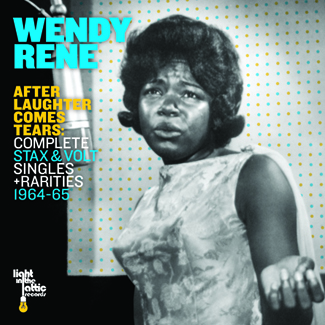
WENDY RENE - After Laughter Comes Tears: Complete Stax & Volt Singles + Rarities 1964-65

Light In The Attic has been on a tear (ha) this past year, with recent reissues and archival finds from the likes of Charles "Packy" Axton, Jim Ford, the Louvin Brothers, Shin Joong Hyun, the Mowest imprint, and Michael Chapman, but we were especially excited and surprised to see this anthology on the label's release schedule!

"This will be the first ever anthology of the mysterious Southern soul queen who cut some of the most achingly gorgeous 45s on Stax and Volt back in the day. While she’s been sampled to death by everyone from the Wu-Tang Clan to Alicia Keys and covered by Lykke Li, little is known about the singer’s short but brilliant career until now. After 45 years spent decidely out of the spotlight, we’re grateful to have Wendy involved in putting together this special anthology, which includes all of her singles and close to a dozen rarities." - Light In The Attic

"Much of Rene's work was recorded when she was in high school (and after she quit), and you can hear it in her voice, which is breathtakingly clean and pure, filled with the sense that she's singing with every ounce of her body. Part of the collection's urgency too is because of the backing band: the tracks feature the Stax session players Charles "Packy" Axton and the members of Booker T. and the MGs at the peak of its powers, including Steve Cropper on guitar and Booker T. Jones on organ." - L.A. Times

Monday
Feb062012

VA - On With The Show: The Johnny Otis Story, Volume 2 (1957-1974)

As much as we urge those who have yet to hear Midnight At The Barrelhouse to also give that first volume a listen, some of the most irresistible moments on this second set might be when Otis and band tackle R&B rhythms popularized by other outfits, putting their own hep and savvy spin on them, whether the Bo Diddley beats of "Mumblin' Mosie," "Crazy Country Hop," "Hand Jive One More Time" and, well, "The New Bo Diddley," or the "Tramp"-ed up, lip-smacking "Country Girl."

"On With The Show lives up to its title by picking up Johnny’s story from just before where the first volume left off, and carrying it through to the mid-'70s – the point at which he stopped releasing new music and began diversifying his talents into cultural, spiritual and political areas.

Johnny found that he was fighting a losing battle as R&B began to get pushed off the charts by early '60s pop and, subsequently, Mersey Beat. But he still made great music whether the public bought it or not, and On With The Show contains many of the most enduring Otis classics in Johnny's massive catalogue, such as "Castin' My Spell," "Crazy Country Hop" and "Mumblin' Mosie."

The second half of the CD chronicles Johnny's creative renaissance via the 1969 Cold Shot album and its chart single "Country Girl." It also features early groundbreaking performances by his teenage son and nascent guitar hero Shuggie, and several cuts that have latterly become much played rarities on the funk and jazz scenes." - Ace Records

Sunday
Jan292012

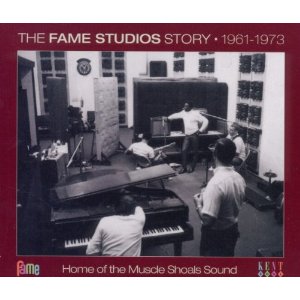
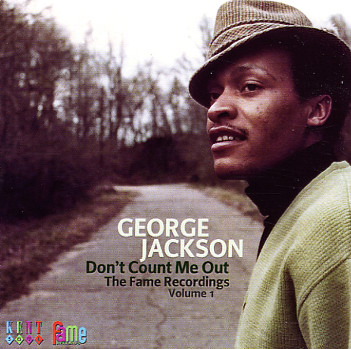
VA - The FAME Studios Story 1961-73 / GEORGE JACKSON - Don't Count Me Out: The FAME Recordings Vol. 1

Ace/Kent's sequel of sorts to 2008's Take Me To The River: A Southern Soul Story 3CD set, The FAME Studios Story hones in on Muscle Shoals' golden era, while Don't Count Me Out further focuses on George Jackson's peak years at the studio, from 1968 to 1972.


"The FAME Studios Story 1961-1973 is an exhaustive 3CD set derived from two years’ worth of excavations by the intrepid Ace team at the hallowed FAME vault. The result is a full programme of FAME-related releases slated for issue on Ace, Kent, and BGP over the next couple of years, but the lynchpin is this definitive anthology that focuses upon the halcyon days of the studio and the label. It’s an open-minded, celebratory overview that, across 75 tracks, spotlights both artists and records that are either acknowledged greats, or lesser known – yet no less worthy – entries in the lexicon of soul." - Ace Records

"Rick Hall, who owned FAME, knew that if a top soul artist was coming into the studio and some songs were needed, then George Jackson was the man. He was valued so much as a songwriter that his career as a singer was sadly neglected, and only two 45s were issued during his long association with FAME. Luckily for us, Rick Hall held on to a truckload of the other recordings George cut at FAME which have remained in the vaults until Tony Rounce, Dean Rudland and Alec Palao plucked them from the shelves for this terrific release and several future volumes." - Ace Records

Monday
Dec192011

OXFORD AMERICAN - 13th Annual Southern Music Issue

Whether the holiday season takes you out of town or lets you do your running around at home this year, Oxford American's music issue is a trustworthy travel companion, stuffed with approachably academic takes on the artists and cultures of the Southern states by a star-studded cast of critics (focusing this year on the Magnolia state, Mississippi). A must-read and a fantastic gift idea, complete with an equally informative and entertaining 27-track companion CD compilation.

Friday
Dec162011

VA - Eccentric Soul: The Nickel and Penny Labels

It's been two and a half years since the last volume in Numero's Eccentric Soul series (Smart's Palace) was released; getting to now hear such stellar cuts as Little Ben & The Cheers' "I'm Not Ready To Settle Down" and Jerry Townes' "Three Sides To A Triangle," though, has made The Nickel and Penny Labels well worth the wait.

"Chicago’s Richard Pegue was one of the most intriguing figures to come out of the Chicago soul scene in the 1960’s and 1970’s. Raised during the city’s fertile Doo-wop era, Pegue immersed himself in music immediately. He cut his chops as a mobile dj, record store clerk and recording artist before stepping into the booth as one of Chicago’s most enduring radio personalities to grace the city’s airwaves. The Nickel and Penny labels featured in this compilation are twin sides of the same eccentric coin, Pegue himself. He was the writer, arranger and producer of some of the most beautiful Chicago soul records in the ’60s and ’70s; too bad they all went out of print weeks after being released.๏ปฟ" - Numero Group

"Little Ben & The Cheers’ “I’m Gonna Get Even With You” is hummable as hell, but spikes its classic Motown punch with a shot of ego-wounded nastiness, and the vigorous pulse and righteous back and forth singing on South Shore Commission’s “Shadows” are just two of a half-dozen earworms that the song will lodge in your brain." - Dusted

Friday
Dec162011

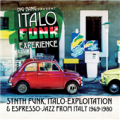
VA - Big Band Present: Italo Funk Experience

Another excellent entry in Nascente's Experience series. Bene!

"Italian Funk Experience features lost soundtrack gems from cult soundtrack composers such as Piero Piccioni & Piero Umiliani, modal-jazz classics from Lee Konitz & Giovanni Tommaso, twisted Italian funk from the likes of Tony Esposito and super-rare pieces from the cult Italian library music label Rotary, many composed by Italian jazz-legend Amedeo Tommasi.

Big Bang is the production name of Simone Serritella, head honcho of the Italo-jazz re-release label Arision, and under his production name Big Bang, a celebrated jazz-dance producer and favourite of Gilles Peterson." - Demon Music Group

Monday
Dec052011

VA - Dynamic Grooves: Funk and Groovy Soul From the Vaults of Scepter, Wand, Dynamo and Musicor

Complementing/supplementing Kent's Manhattan Soul comp from earlier this year, the ACE family of reissue labels (this time around, BGP) unearths yet more late-'60s/early-'70s NY soul.

In 1960s New York, both the Scepter/Wand and Musicor/Dynamo groups of labels were at the peak of the independent label scene. They had hit artists from across the musical spectrum, but with a very strong foot in the world of soul. By the late '60s, as that world was starting to be strongly influenced by funk, they were in a position as established players in the industry to sign up recordings from all around the United States. Dynamic Grooves focuses on the labels’ output, providing a snapshot of the scene in which they worked at this time. - Ace Records

Thursday
Nov102011

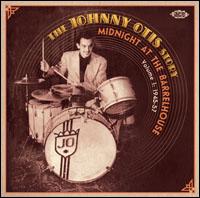
VA - Midnight At The Barrelhouse: The Johnny Otis Story, Volume 1 (1945-57)

We can't stop playing this in the shop—with the wide variety of '40s/'50s styles covered (from R&B to jump blues to fuller, big-band arrangements) and such standout tracks as "The Turkey Hop", "Oopy-Doo" and "Hound Dog", customers' ears pretty much always perk up, and we're invariably asked what we've thrown on. A real grabs-you-from-the-get-go crowdpleaser from an orchestral revue that clearly put on one heck of a show.

"Although universally recognized as an important figure in mid-20th century rhythm & blues, Johnny Otis did not make the most consistent records, whether he was the featured artist/singer or involved in more of a production capacity. This first volume of a two-part career overview compiles some of the more significant entries in his discography (a massive one if you count his productions)." - Allmusic

"The spectacular career of Johnny Otis was a microcosm of the entire Los Angeles postwar R&B and subsequent rock ‘n’ roll scene. He wore every hat imaginable during those rollicking years: bandleader, musician (drummer, vibist, and pianist), dynamic singer, prolific songwriter, hitmaking producer, label owner (Dig Records), deejay, and TV host, excelling at all[...] Ace’s 25-song overview of Otis’ dauntingly voluminous early catalog does a splendid job of examining the first dozen years of Johnny’s recording career, its songlist spanning no less than eight labels." - Blues Revue

Saturday
May212011

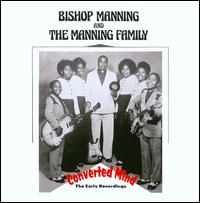
BISHOP MANNING AND THE MANNING FAMILY - Converted Mind: The Early Recordings

This is one super cool release, one that seems to spit out endless new favourites every time I give it a spin. Coming off like a family-affair doppelganger to the Staple Singers, Bishop Manning and his family churned out positively righteous guitar-driven gospel soul in the '70s with the kind of fervour that only a born-again can deliver. 

Manning has a story that would sound like such a bad cliché were it not true. Born Dready Manning in North Carolina in 1934, he picked up the guitar at age 6 and eventually followed the familiar bluesman path of playing juke joints and drinking a whole lot of booze. That was until 1962, when he began spouting blood from the nose and hemorrhaging, only to be "saved" by the prayer of neighbours. By the mid-'60s, Manning had started the family business with his wife Marie and their five kids, sending his recordings to Hoyt Sullivan, a '70s gospel impresario who apparently told the family that the records were making no money, despite the opposite being true.

Still playing today, Manning must be very pleased to have this come out and, with hope, will make a couple of bucks from this 28-song collection rammed with sanctified greatness. The set is a major coup for Fat Possum, and will likely be a contender on year-end lists. Most songs here feature the avuncular Manning on vocals and his vibrantly bright-toned rhythm guitar sound, best heard on "I Wanna Thank You Jesus" and "Something Inside Of Me". He takes on the country gospel standard "I Am A Pilgrim", a childhood favourite of his, with aplomb, a song he loved from an early age that works perfectly with the rest of his down-home rural soul. He shakes thing up by allowing his family to take turns on the mike.  Wife Marie takes a couple of leads, and then there’s little Paul’s prepubescent rasp on "I Know You Been Good To Me". It’s all deliriously great stuff, and a gem well worthy of its resurrection. Best gospel reissue of the year? Nope. This is one of the best releases of the year, period. In Manning's words: Thank you, Jesus!

Monday
Feb212011

WILLIE WRIGHT - Telling the Truth

For Willie Wright to have recorded a spare soul-drenched folk album in a single-day session in 1977 New York, it’s hard to imagine he was hoping for renown stretching beyond the night spots and Nantucket yacht clubs where the travelling musician played at and sold this, his second album. 

Like many singers of his generation, Wright got his start in doo-wop groups before falling into the folk scene and recording an album in 1963 on Argo Folk, a subsidiary of Chess Records. In the intervening years between that album and Telling The Truth, he seemed to have developed a taste for faux island rhythms to add zest to his often meditative atmospheric folk. The arrangements here are super-lean, usually boasting little more than guitar commentary from The Jimmy Castor Bunch’s Harry Jensen, hippy-dippy flute, and light percussion with the occasional funky rhythm section on the more swinging tunes. Call it spiritual folk jazz, an unusual descriptor for sure, but one that only applies to a few 1970s artists, including Terry Callier, Jon Lucien, John Martyn, Eugene McDaniels, and Gil Scott-Heron. 

Not all is on the esoteric end of things: "I’m So Happy Now" swings nicely with the help of his daughter Sheila on vocals, while "Nantucket Island" ends up slightly more Caribbean than it should considering its subject, but so what? "Love is Expensive" brings a touch of reggae bounce, and on "Lady of the Year" and "Son, Don’t Let Life Pass You By", he’s a dead ringer for Lou Rawls. But it was his take on Curtis Mayfield’s “Right On For Darkness” that first caught attention of collectors. Not only is it included here on disc, but it’s also thrown in as a bonus functional 5" (!) vinyl single, backed with the self-identity-probing "Africa". 

Of course, this sold like hotcakes at dinnertime—a nice idea, but a bit on the later side of timing. Wright disappeared further into obscurity, never to record again, although the opportunity did arise in 1981 for another New York City session. (He never bothered to show up.) Diagnosed with Parkinson’s, he still writes today, but is long retired from live performance, so don’t hold your breath for a comeback.


Thursday
Nov252010

SYL JOHNSON - Complete Mythology (6LP + 4CD box set)

When Numero Group put out the Twinight instalment of their ongoing Eccentric Soul series in 2007 and left out unappreciated soul giant Syl Johnson, eyebrows were raised. One way of looking at the omission was that maybe the artist better known for his Hi recordings was just too big to fit Numero’s mandate of bringing attention to complete obscurities, which Johnson certainly is not. That licensing issues may have also kept such wonderful material off that excellent compilation was another potential answer. Then there was the slight possibility, that glimmering hope, that the revered reissue label were holding back with something truly special.

Three years later, not only have Numero delivered the goods on Syl Johnson's Twinight material, but they've gone far beyond what any soul fan could have hoped for and put together a package that also gathers the rest of his pre-Hi material in a gorgeous 4CD and 6LP box! From the '50s to the '70s, Johnson’s earlier career is covered across his many homes including King/Federal, Shama, TMP/Ting, Zachron, One-Derful, Cha Cha, Special Agent, Trip, and P-Vine. The vinyl gives you the two Twinight LPs with original album art, plus four more slabs collecting singles from the remaining labels. It’s all reproduced on the CDs, and comes with a book of detailed discographic/biographic information, including interviews with the man himself. The price is excellent too, considering the kind of archaeology and investment it would take to amass a similar collection in original form.

And the music? Over the years, hip hop producers and soul aficionados have propelled Syl Johnson to cult status, thanks to a career that spanned late '50s R’n’B to classic funky '70s soul. Well-covered songs like “Is It Because I’m Black?”, and beats that have been plundered endlessly for samples, have secured him a very special place in the hearts of soul fans (certainly a much bigger one than when he recorded this material).

This one’s a treat for sure, and a perfect gift for the holiday season.

Tuesday
Aug312010

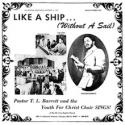
PASTOR T.L. BARRETT - Like A Ship (Without A Sail)

When we reviewed Good God! Born Again Funk earlier this year, it was the opening cut, “Like A Ship (Without A Sail)”, that impressed us the most. Recorded in 1971 by Pastor T.L. Barrett & The Youth For Christ Choir, the track upped the stakes for standard gospel, which always made the effort to communicate directly with god, this time sonically approximating the sound of a congregation beamed down from heaven above. The gargantuan sound generated by Barrett’s 40-strong youth choir was bolstered by Gene Barge and Richard Evans (both session heavies for Chess Records), guitar giant Phil Upchurch, and Barrett’s own piano chops, which he developed during his time at Manhattan’s Village Gate in the '60s. Back in his hometown of Chicago, Barrett took over the pulpit at Mt. Zion Church and built up a massive flock, with Sun Ra, Phil Cohran, Donny Hathaway, and Earth Wind & Fire’s Maurice White and Philip Bailey all dropping by to dig the deep spiritual vibes. Add to that his involvement in Jesse Jackson’s black-empowerment Operation Breadbasket, and you can see why Barrett’s strong musical/religious influence in Chicago led to a street being named after him!

A serious rarity on the vinyl market, Like A Ship (Without A Sail) is also a rare work of inspiration in every sense of the word: gospel music so rarely sounds this groovy, updating Ray Charles’ sacred soul-jazz to suit the times (“Blessed Quietness”), and at times also showing the influence Hathaway had on Barrett (“Wonderful”). Honestly, as a hardened atheist, I’d join this choir nonetheless just to thrill in the pure oxytocin-induced joy of singing this music. My vote for most sublime reissue of the year!  

Tuesday
Jul132010

ALICE CLARK - The Studio Recordings 1968-1972

First things first: cue track two, “Don’t You Care”, a vocal and instrumental tour-de-force that became an anthem of the early-'90s London club-jazz scene, when it was rescued from oblivion by rare-groove crate diggers. The same cannot be said about the mysterious Alice Clark, who recorded the track for her only album and then disappeared into total obscurity. Nobody really knows very much about her beyond fuzzy recollections from her sessions. What we do know is that she lent her powerful vocals to the Mainstream label, better known for jazz releases but looking in 1972 to tap into the soul market (also check out A Loud Minority: Deep Spiritual Jazz from Mainstream Records 1970-1973,  which came out last month).

Clark’s self-titled album, found here along with a couple of sides she had previously recorded with Warner, gets an extra boost from the Mainstream players, especially from exceptionally propulsive drums and horns, and arrangements from Ernie Wilkins. The thrill I get listening to “Don’t You Care” (penned by Bobby Hebb of “Sunny” fame) has made it my most-listened-to track of the year so far. What makes this album such a unique thrill—much tighter and jazzier than typical soul, from a singer too Lyn Collins-raw for jazz—is what made it so unmarketable when it came out. It's a shame; she should have been bigger than this. 

(As a postscript, if I had known in January that this would be released domestically, I still would have bought the expensive Japanese import after sampling a few tracks. You just can’t pass up a discovery of such urgent greatness as this. This will surely be in my year-end list—highest recommendation!)

Friday
Jul092010

VICKI ANDERSON - Wide Awake In A Dream: James Brown Productions From The Pre-Funk Years

This one might surprise those who are more familiar with Vicki Anderson’s '70s funk period. Anderson got her start in the James Brown Soul Revue in 1965, replacing Anna King before vacating her position with the entry of Marva Whitney in 1968. While she did rejoin in 1969 for another three years before being replaced by the equally tough Lyn Collins, it’s her original stint as one of Brown’s Soul Sisters that provides the focus here. Her earliest work fits neatly into the early female soul genre, but that doesn’t make it any less worthy. An early highlight is “My Man”, which I’m willing to bet money was a key influence on the Zombies’ “Time of the Season” with same syncopation and background sighing ahhh’s, and a near-identical key. 

Aside from Motown, New Orleans (in particular Irma Thomas’ waltz-time classics) provides the strongest shading to her stylings. It’s all prime '60s soul, made all the more exciting by a couple of great duets with Brown on “Think” and an incendiary reworking of the Everlys' “Let It Be Me” that will knock the top of your head off. Of course, she also duets with Bobby Byrd, Brown’s right-hand man and Anderson’s husband by this point, on “Loving You”. There’s a reason why James Brown called Anderson the best singer he ever had in the Revue—now it’s up to you to find out why.    

Monday
May242010

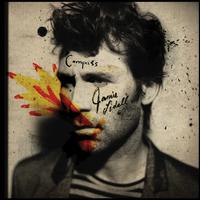
JAMIE LIDELL - Compass

Let's not dance around the subject (ha!): white dudes making R&B is always a tricky deal. Be too stylistically reverential and on point, and it just comes across as cheap imitation at best, and inappropriate at worst. But be too irreverent and wacky with the form, and it while it might be your own style, it can be awfully disingenuous and trendy.

For my money, Jamie Lidell is walking this line about as well as any caucasian you can name. It helps that the man can actually sing, for one—his voice is a marvelously tangled, mangled mess, alternately ravaged and sensuous. But whether he's trying to modernize (2005's Multiply) or inhabit (2008's Jim), he makes far more good decisions than bad.

He's not immune to falling flat on his face, but when he does, it's usually when he's playing it safe—Jim's Stevie Wonder-aping first single, "Little Bit Of Feel Good", and that same record's Maroon 5-esque "Figured Me Out" are probably his worst offenders. Compass does many things (some better than others), but one thing it does not do is play it safe. This is easily Lidell's most diverse record—the squelchy belch funk of "The Ring", the marachi-tinged title-track ballad, the ricochet beats of "You Are Waking"—he's all over the place and clearly enjoying the experience. At 14 songs, Compass ironically comes across as a little lost at first, but once you acclimatize to its anything-goes spirit, it's a thrilling collection. The highs of Multiply are never quite reached, but it's a real flag-in-the-sand moment for the man—an attempt to stake claim to a brand of oddball R&B a weirdo white guy can call his own. When he hits the late album peak of the Beck-assisted "Coma Chameleon" and the absolutely luscious velvet drapes of "Big Drift", you know he's onto a voice that is an honest one. You can't ask for much more than that.

Wednesday
May122010

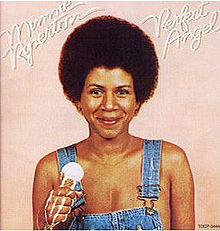
MINNIE RIPERTON - Perfect Angel

Before recording Perfect Angel in 1973, the late Minnie Riperton’s career was already on the wane after spending the late '60s with the Rotary Connection and then going solo with the Charles Stepney-produced Come To My Garden in 1970. Coaxed back to the studio three years later and driven by the guiding hand of Stevie Wonder on a bunch of key tracks, it was a slow build on the sales front, mostly because of its broad scope, covering rock (opener “Reasons”), weird jazz-soul (“Take A Little Trip”) and, of course, the twee-est soul track in history (“Lovin’ You”). It was the latter, originally a melody to soothe her daughter (former SNL cast member Maya Rudolph), that audaciously dropped drums in favour of Fender Rhodes, chirping birds, and those earth-shattering whistle-range notes, and guaranteed the album its place in the pantheon of hard-to-place R&B records. Nearly 40 years later, it still holds up as strongly as material from like-minded artists like Syreeta and the great Jon Lucien. Oh, and dig that delicious cover, too! 

Monday
May102010

LETTA MBULU - Naturally

After recording her first two albums with David Axelrod (Letta Mbulu Sings, and Free Soul, in 1967, and 1968, respectively), then one for Hugh Masekela’s Chisa label, South African exile Letta Mbulu recorded this record for Fantasy. Unlike fellow expat Mariam Makeba, Letta, along with her husband Caiphus Semenya (who wrote and arranged most of this album), fully embraced the fusion of the sounds of her homeland and those of her adopted home in the US. Her more famous Axelrod records were hard to classify beyond their upbeat party numbers and jazzy go-go tunes, but by the time she recorded Naturally her sound had matured in a way that was less uptown and more of an honest, and yes, natural, blend of her roots with that laid-back, folky, gospel-soul stew that, by 1973, she and her husband had a better command of.

On one hand was the killer horn section of Jazz Crusader Wayne Henderson, plus the Adderley brothers, Nat and Cannonball, who set songs like “Hareje” on fire with its deliciously sunshiny mixolydian brass riff in one of the most uplifting tracks you’ll hear this year. Mbulu busts out some deep church 3-part harmonies on “Learn to Love” and “Never Leave You,” while setting some smooth spiritual jazz grooves on “Setho.”  Only an idealist would think such a beautiful merging of American and Soweto idioms could have had a greater influence, but those with clear hindsight will dig this as a rare treat indeed.

Friday
Apr162010

ERYKAH BADU - New Amerykah Part Two: Return Of The Ankh

It's ironic that it's a video from this album (Badu's one-shot stripping stroll through Dallas for first single "Window Seat") that's the source of so much controversy—it is by far a more mellow installment than its New Amerykah predecessor. Where the first record (subtitled 4th World War) was an often angry album, Return of the Ankh chooses to fight fire with love.

It's not so much that the record is overly sentimental or saccharine, but rather that nearly all of the tracks find themselves directly concerned with matters of the heart. This focus imparts a far more settled vibe on the album, and it's hard not to feel just a little disappointed at first. Part of what made Part One such an exciting listen was its exceptionally unpredictable and fearless nature. Songs dissolved into bizarre left turns and absorbing segues—none more so than the awesomely bizarre trumpet-and-voice scat that closed "Me". Return of the Ankh instead lays its cards out on the table for all to see, which makes sense.

Where 4th World War aimed to confront, this album wishes to seduce. And once you become acclimatized to its objectives, the record nearly proves to be its equal. The mid-record double shot of "Gone Baby, Don't Be Long" and "Umm Hmm" is a sultry pairing, while "Love" uses a head-nodding J Dilla track to have Badu channel her inherent oddness in a way that perfectly suits the record. The album's tempo rarely breaks a sweat and its charms are coy and delicate in how they blossom, but this ends up being a very worthy partner to one of the better soul records of the past few years.